In The Face Of Threats, Black Women Continue To Show Up
- Black women have historically led movements for voting rights, education, and criminal justice reform.
- Black women organize locally to address issues like child care, housing, and workers' rights.
- Despite facing hostility, Black women persist in advocating for a more just and equitable future.
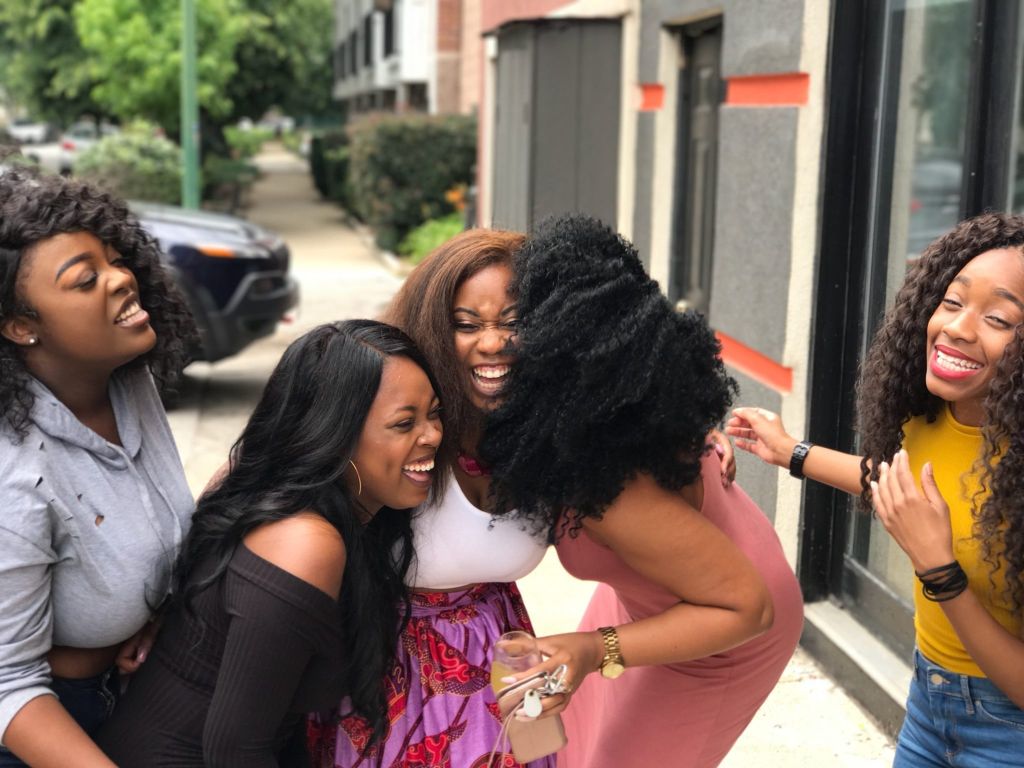
Black women have often been celebrated as a voting bloc that consistently saves democracy. But love and appreciation for Black women often appear short-lived. When the economy tanks or when people fear the future, Black women are often the targets of animosity and resentment. If Black women dare to raise our voices online in an effort to right a wrong, or in support of a nation that sees and serves all, we are demonized. You don’t have to take our word for it: think of all the content creators who build their platforms off the scapegoating of Black women.
Yet throughout history, Black women have been on the frontlines of movements for change. From voting rights to the fight for public education to campaigns to end mass incarceration, Black women have often raised their voices for the liberation of others. Drawing from a well that has been watered by ancestors such as Ida B. Wells, Fannie Lou Hamer, Ella Baker, and so many others, Black women are often not content to be personally ok: we understand that our liberation is tied to others.
While it may be tempting to be fearful about the future, we take heart knowing that every day, in every community, Black women stand up and speak out in support of the beloved community. This doesn’t mean Black women should be burdened by the inaction of others or taken for granted. Yet we acknowledge the ways in which Black women draw strength from other Black women who refuse to be silent or silenced.
As co-leaders of 9to5, a national grassroots organization for working women and nonbinary people of color, we have seen Black women confront painful truths (about the targeting of immigrants, about child care that is inaccessible and unaffordable, or about education that is inequitable). They’ve done this even while facing the reality of a nation that doesn’t always see or choose us.
Our own organization was founded by women who wanted to ensure that working women had good jobs with benefits and a means of caring for themselves and their families. But the legacy of Black women doesn’t stop with the past – indeed, we see it in the present.
In our day-to-day work, we see Black women organizing for voting rights, accessible and fully funded child care, gender justice, and so many other things that make life more just and fair.
Civil rights attorney Nekima Levy Armstrong has been raising her voice to shine a light on the injustice of mass raids. Although she was demonized by the administration, their attacks didn’t dim her light or deter her advocacy. And this isn’t new for Armstrong. In the aftermath of the fatal police killing of George Floyd, she was on the front lines advocating for justice. She is representative of the legacy of Black women who leave the comfort of their homes to disrupt the status quo and win change for the marginalized.
We see this example of Black women showing up locally, too.
In rural Georgia, Cassenda Nelson is the first person families call when something goes wrong: a mother struggling through pregnancy, a renter living in unsafe conditions, an unheard worker. As a community organizer who fights alongside vulnerable communities, she understands that ordinary people working together can drive meaningful change.
In Colorado, Brandy Harrison is leading the charge for paid family and medical leave. A mother of three, and a 9to5 member, Brandy works to educate the community on their rights and the power of their voice. When working families are taken advantage of, people like Brandy inspire them to use their voice to push back. She knows that we are stronger together than we are apart, and as such, Brandy urges women to come together and build allies across race, gender, and class.
In Savannah, GA, Chantelle Hester is a child care educator who believes that the best way to impact the future is to impact current generations. A graduate of 9to5 Georgia’s 2025 Community Justice Fellowship Program, she has 11 years of experience working with children and families. She understands that women cannot work and businesses cannot run properly without flexible, well-funded child care. She knows that disruptions in child care disproportionately hurt Black families.
You may never see Chantell, Brandy, or Cassandra’s name in lights, but that doesn’t mean that they don’t exist. There are people like them in every community. Our job is to find them, resource them, and ensure they can continue to have an impact.
This Black History Month, we honor the many ways leadership lives in everyday moments. Black women are showing up, in ways large and small, to secure a future that is better than the present.
At a time of national unrest and rising anxiety, we should look to Black women – not as targets – but as canaries foreshadowing not only what is happening but what a brighter future might entail.
In the face of persistent efforts to undermine Black political power, Black women continue to organize, connect and imagine a future that is brighter than the past. While the administration works to scrub the contributions of Black people from official records, the contributions of Black women cannot be erased. We are vanguards for the past, and luminaries for the future.
Ashley Panelli and Mica Whitfield are co-presidents and CEOs of 9to5, National Association of Working Women. 9to5 is an organization fighting for economic justice for those most harmed by centuries of racism and sexism: women and nonbinary people of color.
In The Face Of Threats, Black Women Continue To Show Up was originally published on newsone.com